


The 10% tax increase in case of good faith and the corporate tax deduction ban
What after the Constitutional Court ruling and the government agreement?
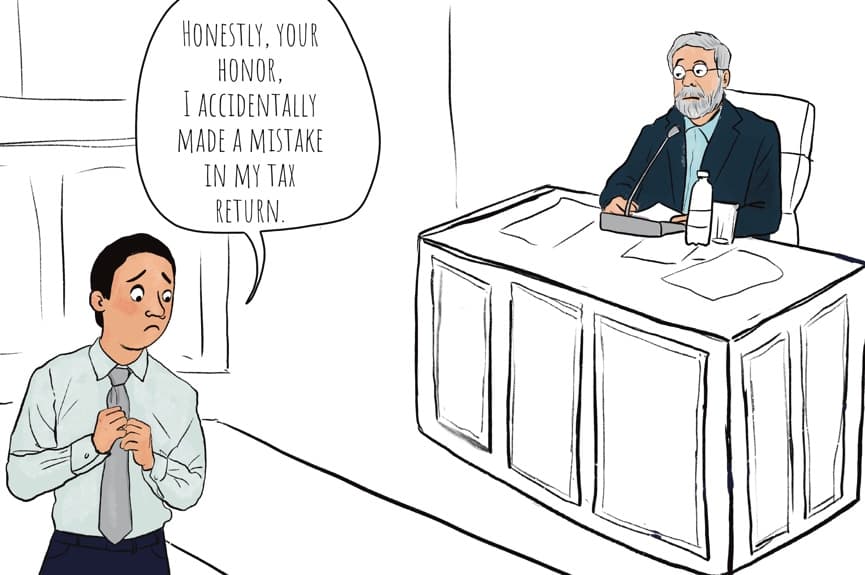
A ruling by the Constitutional Court on 21 November 2024 has caused quite a stir amongst tax professionals.
According to numerous legal publications a taxpayer who committed a first offense in good faith in his/her tax return – pursuant to this ruling – cannot be automatically sanctioned with a 10% tax increase.
Nevertheless, the automatic 10% tax increase had become a common practice by the taxation authorities, much to the frustration of many taxpayers. Indeed, when an effective tax increase of at least 10% is imposed as a result of a tax control, there is also a prohibition in corporate income tax to offset tax losses or other deductions (such as dividend received deduction (DRD) carried forward) against the adjusted taxable result. Thus, in such a case, a company is faced with a minimum taxable base and an effective cash out.
Based on the decision of the Constitutional Court, such tax increases would be void and recoverable. Moreover, in the absence of an effective tax increase of at least 10%, the corporate tax deduction prohibition could not be applied.
In practice, however, it appears that the lower courts (including the courts of appeal of Ghent and Antwerp) take a more nuanced view on this.
As a result, the impact of the Constitutional Court’s decision appears (for the time being?) to be more limited than initially thought.
1. The decision of the Constitutional Court of 21 November 2024
In the judgment of 21 November 2024, the Constitutional Court ruled that in the case of a first offense without the intention to fraud, in principle, no effective tax increase of 10% is applied.
Moreover, in response to a parliamentary question, the then Finance Minister Vincent Van Peteghem stated that by doing so, the Court was in fact confirming the legislator’s intention that the 10% tax increase would not be applied in the case of a first offense.
The decision of the Constitutional Court and the position of the Minister of Finance seem to be clear. However, the lower courts appear to take a more nuanced position.
2. What is the position of the lower courts?
Specifically, the courts of appeal of Ghent and Antwerp have already been confronted (in an ongoing dispute) with the request of a taxpayer to annul the 10% tax increase on the basis of the decision of the Constitutional Court.
However, the Court of Appeal of Ghent sees no valid reason to mitigate or remit the tax increase. The Court points out that a 10% tax increase is the minimum tax increase set forth by law, which the tax administration may waive in the absence of bad faith, but which it is not obliged to do. The Court holds that the tax increase can indeed be applied if a person makes “systematic mistakes”.
The Court of Appeal of Antwerp has also held that while the tax administration can waive a tax increase in the case of good faith, but that it is not obliged to do so. In the case referred to, the Court ruled that the 10% tax increase was in accordance with the law.
In other words, both courts of appeal actually examine whether there are valid reasons to justify the tax increase. These reasons should, in our opinion, already be part of the original justification for the tax increase and not be sought a posteriori.
In any case, it is debatable whether this case law is consistent with the decision of the Constitutional Court. The Supreme Court may clarify the matter.
3. But, the government agreement brings clarity (for the future)
The above discussion is also addressed in the government agreement. It clearly states that the tax fine policy will change and that a first offence committed in good faith will no longer be subject to an automatic tax increase of 10%. Instead, the taxpayer will receive a warning. Logically, this intended reform will only impact the future, leaving the discussion for the past.
The government agreement also mentions that the above-mentioned corporate tax deduction prohibition will be modified, so that it will no longer apply to the losses of the fiscal year. This would reduce the impact of any tax increase.
4. What does this mean for you?
If you were faced with a 10% tax increase (possibly combined with the corporate tax deduction ban), it may certainly be worthwhile to contest it.
This can be done, for example, by filing a notice of objection. The period for doing so is one year from the third business day after the assessment notice was sent.
If this objection period has already expired, a request for a waiver of the tax increase can be considered. This (mercy) request offers the possibility of obtaining partial or full waiver of tax penalties.
However, taking into account the lower case law, it is important to make a factual analysis of your case.
If you have any questions about this or if you would like assistance with the analysis of your file, you can always contact our tax specialists at Andersen in Belgium at +32 (0)2 747 40 07 or info@be.Andersen.com.
Discover more about this topic?
I am looking for a specialist in












See more articles

05.11.2026
•Real Estate, Renting and Co-ownership, Andersen in Belgium
New rules tighten requirements for sustainability claims in the real estate sector
Sustainable, green, energy-efficient or even climate-neutral: these terms have become commonplace in real estate communications. From the end of September, however, the use of such claims will be subject to stricter rules. The new rules aim to better protect consumers against misleading environmental claims. For businesses, the message is clear: commercial communications will need to be more precise.

05.11.2026
•Employment Law, Andersen in Belgium
Belgium imposes new workplace regulations
Employers must make sure that their internal policies are up date according to Belgium’s PIA and prepare for a stricter time registration obligation.

03.11.2026
•Tax Law, Andersen in Belgium
No Exact Correlation Required Between Expenses Relating to a Holiday Residence and Benefits in Kind
In its judgment of 18 June 2026, the Belgian Court of Cassation settled an important question concerning the deductibility of expenses incurred in making a holiday residence available to a company director: must these expenses be capped at the amount of the benefit in kind (BIK) taxed in the hands of the director? The Court answered in the negative.

03.11.2026
•Tax Law, Andersen in Belgium
Copyright and Tax Abuse: The Court of Cassation Gets Its Wires Crossed!
In a rather surprising judgment of 14 September 2026 (F.23.0097.F), the Belgian Court of Cassation failed to correctly identify the legislature's objectives when introducing the flat-rate tax regime for copyright and related rights income. The courts should swiftly distance themselves from this judgment!