


Court forces sperm donor to undergo DNA testing
In a previous article, we discussed an important judgement from the Constitutional Court regarding the rights of donor children. In said article, we already referred to a groundbreaking judgement by the Court of first instance of West-Vlaanderen, section Bruges from June 23, 2023. Through this judgement, our firm obtained an order requiring the presumed donor of a donor child to undergo DNA testing, subject to a penalty payment. A recent article in the Journal of Family Law titled “Mirror, mirror on the wall, who will put an end to donor anonymity in the land?” also refers to this judgement. The Paternity Center also published an official statement in which they advocate for the abolishment of donor anonymity, referring to, inter alia, the judgement of June 23, 2023. Given this renewed focus on the rights of donor children, we will further elaborate on the judgement of June 2023 in this article.
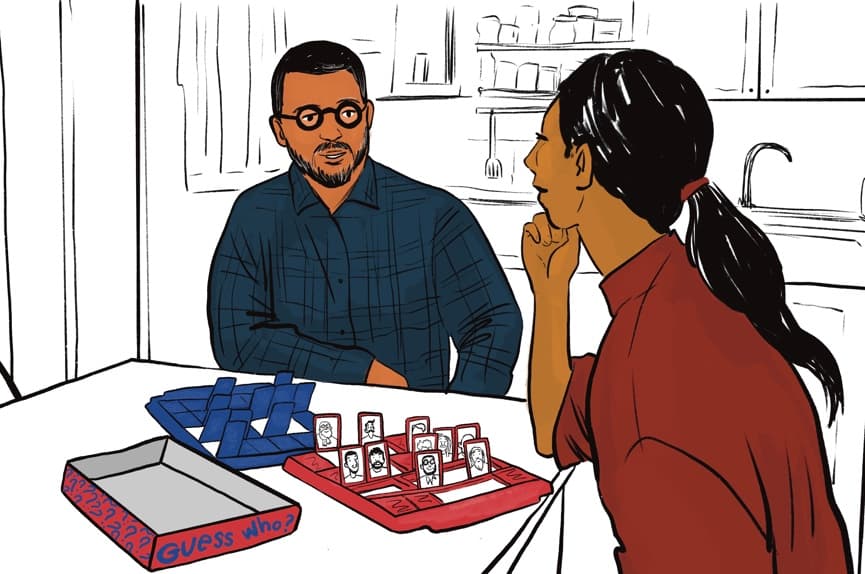
A groundbreaking judgment obtained by our firm
1. Previously…
A child conceived through anonymous sperm donation and in-vitro fertilization discovers at a certain age that her legal father is not her biological father. She therefore seeks clarity about her biological paternity on her father’s side, without wanting to break the bond with her legal father.
The donor child then embarks on a years-long search: she conducts genetic research, including registering her DNA in various online DNA databases (e.g., My Heritage and Ancestry). This research led to a probable match. This person was contacted but refused any cooperation to establish the paternity link to the donor child, fearing the impact on his own private life.
The donor child was therefore required to initiate legal proceedings.
The court ruled in her favor and ordered the presumed donor to undergo DNA testing, subject to a penalty payment. This is a precedent in Belgium.
2. The Court’s reasoning
In the reasoning of its judgement, the Court did not make an overnight decision. A balance of interests had to be made between the donor child’s right to paternity information on the one hand and the donor’s rights to privacy and physical integrity on the other.
The Court considered the following elements presented by our firm:
- The suspected donor knew, or should have known, that his donation could lead to the conception of a child.
- The donor child had no intention of violating the donor’s privacy. She merely seeks to uncover the biological truth.
- The uncertainty of the donor child regarding her biological paternity and its impact on her psychological well-being.
- Anonymity in donor conception is increasingly under pressure: many countries have already enacted legal prohibition against donor anonymity and, with the rise of online DNA databases – which can provide reliable information to, for example, a court – genetic anonymity has become an illusion.
- Belgian case law increasingly recognizes that the child’s right to know its biological origins takes precedence over other rights.
In this case, the Court acknowledges that the donor child’s right to paternity information takes precedence over the donor’s right to keep his biological paternity hidden. This indicates that donor anonymity, which is still legally enshrined in Belgium, is under increasing pressure. Considering the suspicious behavior of the presumed donor during the proceedings, the Court thus ruled that he was obliged to undergo DNA testing.
The Court rightly concludes its judgement with the philosophical reflection that there are no winners or losers in this case. The donor child certainly did not expect that her mere existence would pose a threat to her presumed biological father, nor could she have anticipated that her search would lead to legal proceedings.
3. Conclusion
A donor, even if anonymity was promised at the time, must face reality and understand that a donor child has the right to the biological truth. The court has (thankfully) acknowledged this.
If you have any questions regarding this topic, please do not hesitate to contact our specialists at info@be.Andersen.com or +32 (0)2 747 40 07.
Discover more about this topic?
I am looking for a specialist in


















See more articles

05.11.2026
•Real Estate, Renting and Co-ownership, Andersen in Belgium
New rules tighten requirements for sustainability claims in the real estate sector
Sustainable, green, energy-efficient or even climate-neutral: these terms have become commonplace in real estate communications. From the end of September, however, the use of such claims will be subject to stricter rules. The new rules aim to better protect consumers against misleading environmental claims. For businesses, the message is clear: commercial communications will need to be more precise.

05.11.2026
•Employment Law, Andersen in Belgium
Belgium imposes new workplace regulations
Employers must make sure that their internal policies are up date according to Belgium’s PIA and prepare for a stricter time registration obligation.

03.11.2026
•Tax Law, Andersen in Belgium
No Exact Correlation Required Between Expenses Relating to a Holiday Residence and Benefits in Kind
In its judgment of 18 June 2026, the Belgian Court of Cassation settled an important question concerning the deductibility of expenses incurred in making a holiday residence available to a company director: must these expenses be capped at the amount of the benefit in kind (BIK) taxed in the hands of the director? The Court answered in the negative.

03.11.2026
•Tax Law, Andersen in Belgium
Copyright and Tax Abuse: The Court of Cassation Gets Its Wires Crossed!
In a rather surprising judgment of 14 September 2026 (F.23.0097.F), the Belgian Court of Cassation failed to correctly identify the legislature's objectives when introducing the flat-rate tax regime for copyright and related rights income. The courts should swiftly distance themselves from this judgment!